dinglimachine01@gmail.com
+86 16638159081(Wechat/WhatsApp)
dinglimachine01@gmail.com
+86 16638159081(Wechat/WhatsApp)

In the palm oil cultivation and processing industry, a large amount of EFB (empty fruit bunches) is generated annually as a byproduct. In the past, this waste was difficult to transport, lacked effective applications, and even became an environmental burden. However, with the popularization of EFB carbonization machines, its resource value is being rediscovered, bringing new opportunities to the industry.
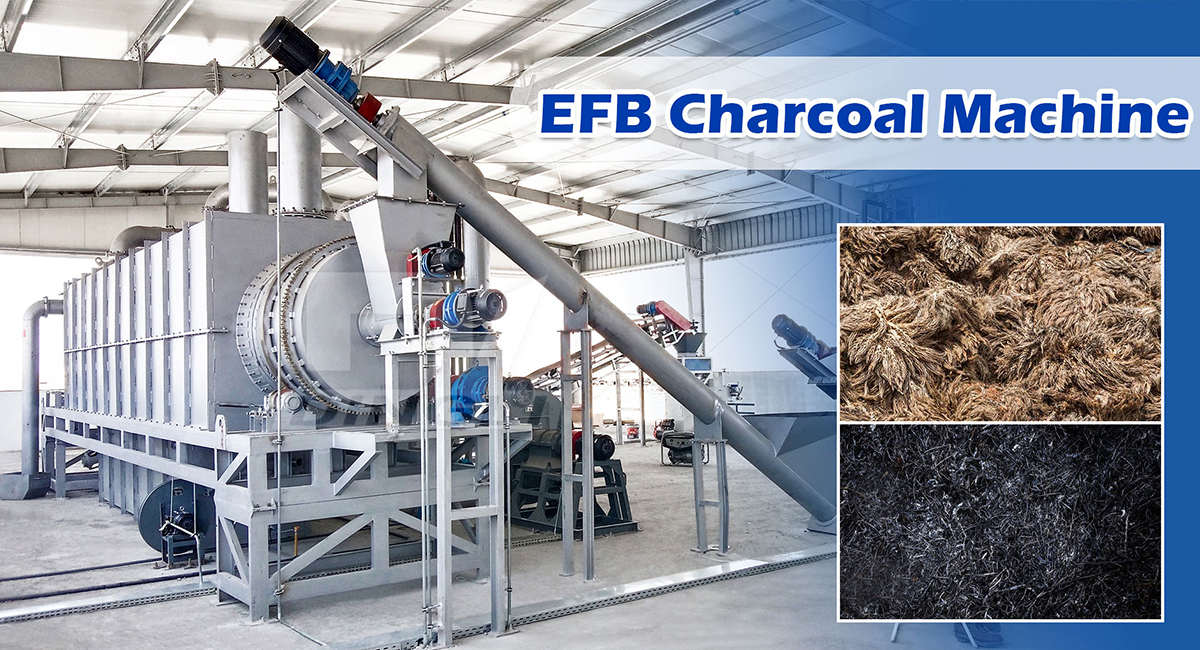
The basic function of an EFB carbonization machine is to pyrolyze the bulky, high-fiber empty fruit bunches, converting them into lightweight and stable EFB charcoal. This process not only reduces waste volume but also enhances the usability of the material. Biochar possesses excellent adsorption and stability properties, making it widely applicable in agriculture, soil and water management, and filtration materials.
Driven by the "dual carbon" goals and biomass recycling policies, more and more regions are considering EFB as an important renewable resource. By introducing continuous EFB carbonization furnaces, companies can stably process large quantities of raw materials, improve production efficiency, and reduce the environmental pressure caused by traditional waste disposal methods.
In the future, the application of EFB carbonization equipment will become even more widespread. Whether it's palm oil processing plants, biomass energy companies, or sustainable development projects, all will benefit from this equipment, transforming EFB from "waste" into a truly green resource.
I would like to ask for a price quotetion for DLTJ2212.
Hello. How much is your "DLTJ1912" model?
Please send offer for biochar making machine with all technicals spécifications
We are in need of a rice husk charcoal machne for bio coal making.
We are intrested in contiunous carbonization machine, we need a high capacity.
We are interested in biomass pyrolysis machine 2 tons per hour .
Interested in wood charcoal machine. what price and size of wood it creates?