dinglimachine01@gmail.com
+86 16638159081(Wechat/WhatsApp)
dinglimachine01@gmail.com
+86 16638159081(Wechat/WhatsApp)

Continuous carbonization machines play a pivotal role in transforming agricultural waste into high-value biochar, thereby simultaneously fostering environmental protection and promoting resource recycling. This advanced equipment is specifically engineered for continuous operation, enabling the large-scale and highly efficient processing of a wide variety of agricultural residues.
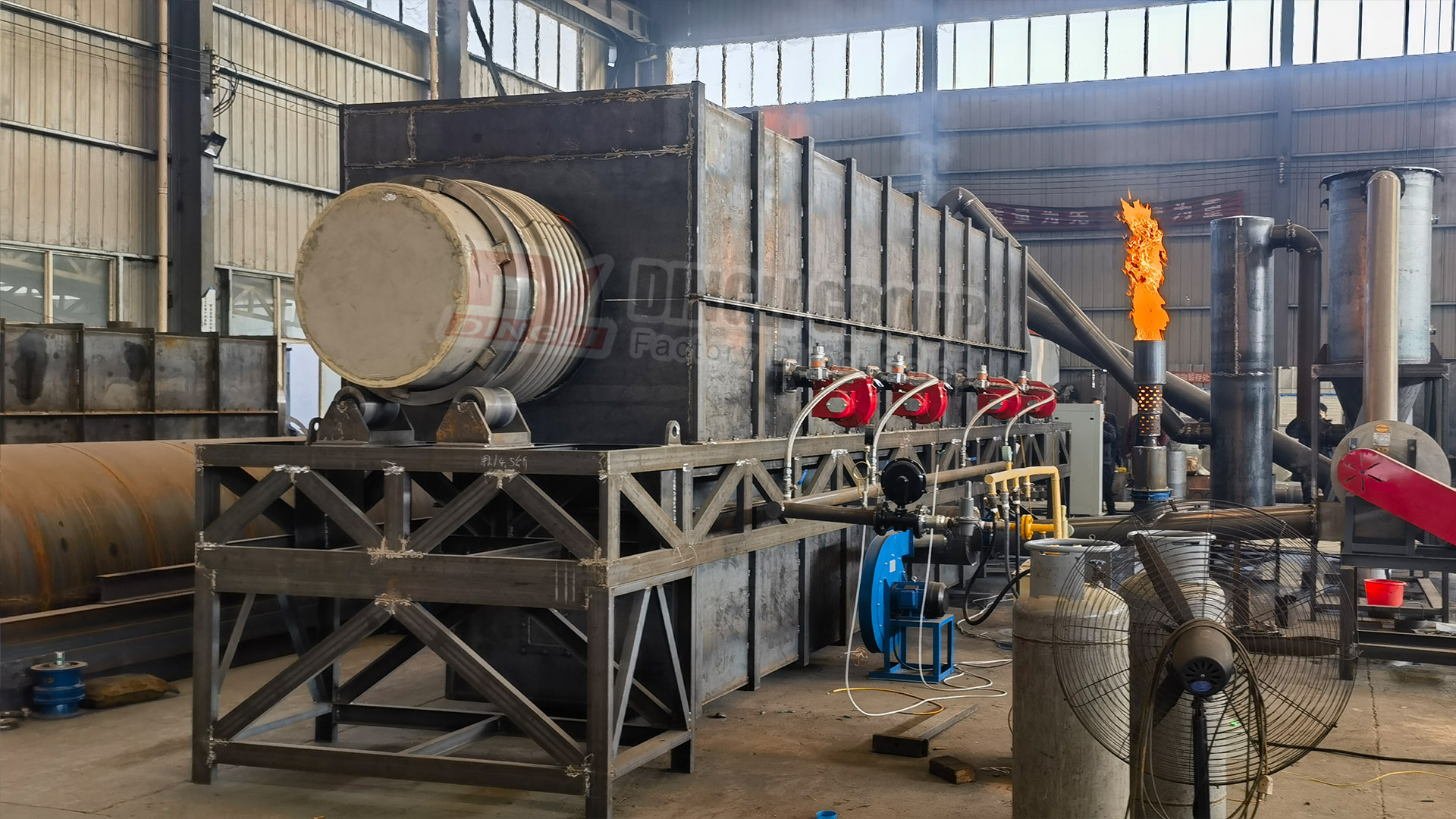
Common feedstocks include rice husks, crop stalks, corn cobs, coconut shells, and palm kernel shells, among others. These raw materials are fed into the machine, where they undergo a high-temperature pyrolysis process within an oxygen-limited environment. This process converts low-value agricultural waste into biochar—a versatile material characterized by its stable carbon content. The continuous carbonization machine facilitates uninterrupted feeding and discharging, thereby substantially boosting production efficiency and significantly reducing the need for manual labor. Furthermore, thanks to stable operating conditions, this equipment ensures the consistent quality of the final product.
Typically, this system integrates multiple stages—including drying, carbonization, cooling, and gas purification—into a single, complete production line. Combustible gases generated during the production process can be recovered and utilized as a heat source, thereby effectively reducing overall energy consumption. By virtue of their high efficiency, environmental benefits, and economic value, continuous carbonization machines are increasingly becoming an indispensable solution in the fields of agricultural waste management and biomass energy production.
I would like to ask for a price quotetion for DLTJ2212.
Hello. How much is your "DLTJ1912" model?
Please send offer for biochar making machine with all technicals spécifications
We are in need of a rice husk charcoal machne for bio coal making.
We are intrested in contiunous carbonization machine, we need a high capacity.
We are interested in biomass pyrolysis machine 2 tons per hour .
Interested in wood charcoal machine. what price and size of wood it creates?