dinglimachine01@gmail.com
+86 16638159081(Wechat/WhatsApp)
dinglimachine01@gmail.com
+86 16638159081(Wechat/WhatsApp)

Agricultural waste such as rice husks, crop straw, corn stalks, coconut shells, palm residues and other biomass residues is often generated in large quantities during agricultural production. A modern agricultural waste carbonization line provides a practical way to convert these biomass residues into stable, carbon-rich biochar while improving the utilization of agricultural resources.
The production line typically integrates raw material preparation, drying, feeding, continuous carbonization, gas recycling, cooling and biochar collection. During the carbonization process, biomass is heated under controlled oxygen-limited conditions. The resulting biochar can be used in agricultural applications such as soil amendment, depending on its properties and applicable standards.
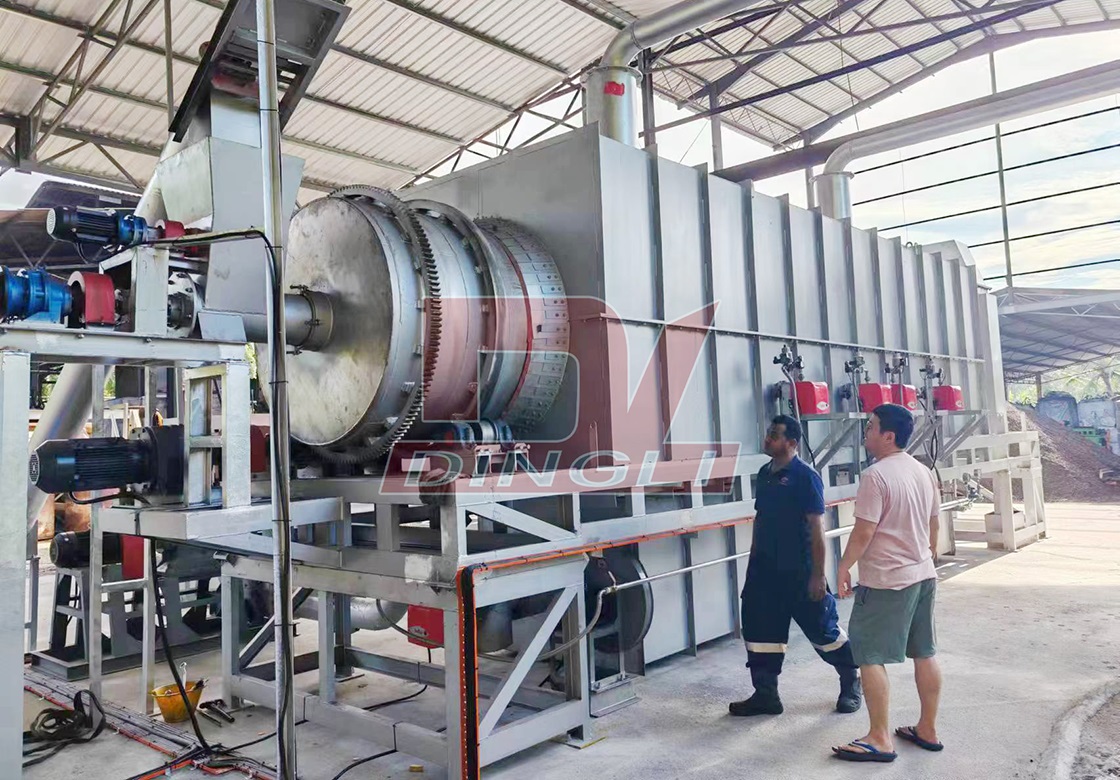
For carbon sink projects, the equipment design is particularly important. Factors such as feedstock origin, moisture content, carbonization conditions, energy consumption, emissions control, biochar characteristics and traceability can affect project accounting and certification.
By transforming agricultural residues into biochar instead of conventional waste disposal, the carbonization line can support a waste-to-resource and carbon-removal business model. Carbon credits, however, are subject to the requirements of the selected carbon standard and project validation and verification; installing carbonization equipment alone does not automatically generate credits.
Dingli Group can provide integrated solutions covering feedstock preparation, carbonization equipment, gas utilization, cooling, biochar collection and customized production-line design, helping customers develop agricultural waste biochar projects with carbon-removal applications in mind.
I would like to ask for a price quotetion for DLTJ2212.
Hello. How much is your "DLTJ1912" model?
Please send offer for biochar making machine with all technicals spécifications
We are in need of a rice husk charcoal machne for bio coal making.
We are intrested in contiunous carbonization machine, we need a high capacity.
We are interested in biomass pyrolysis machine 2 tons per hour .
Interested in wood charcoal machine. what price and size of wood it creates?